30 Yard Dumpster Rental in Plymouth, MA
At this size, you’re past the point of comparing pickup truck loads — a 30-yard is for jobs that genuinely need room: a whole-house cleanout, a full renovation spanning more than one room, or a demolition project with real volume behind it. Starting at $675 in Plymouth, including delivery, pickup, and 3 tons of debris.
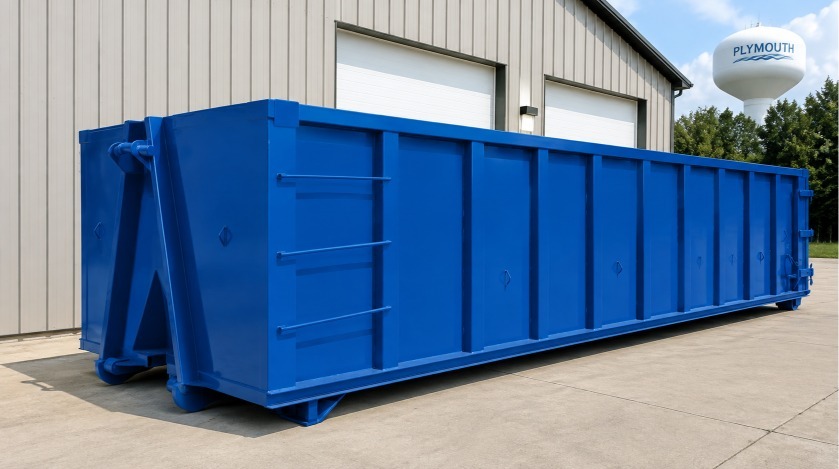
30 Yard Dumpster Dimensions & Size
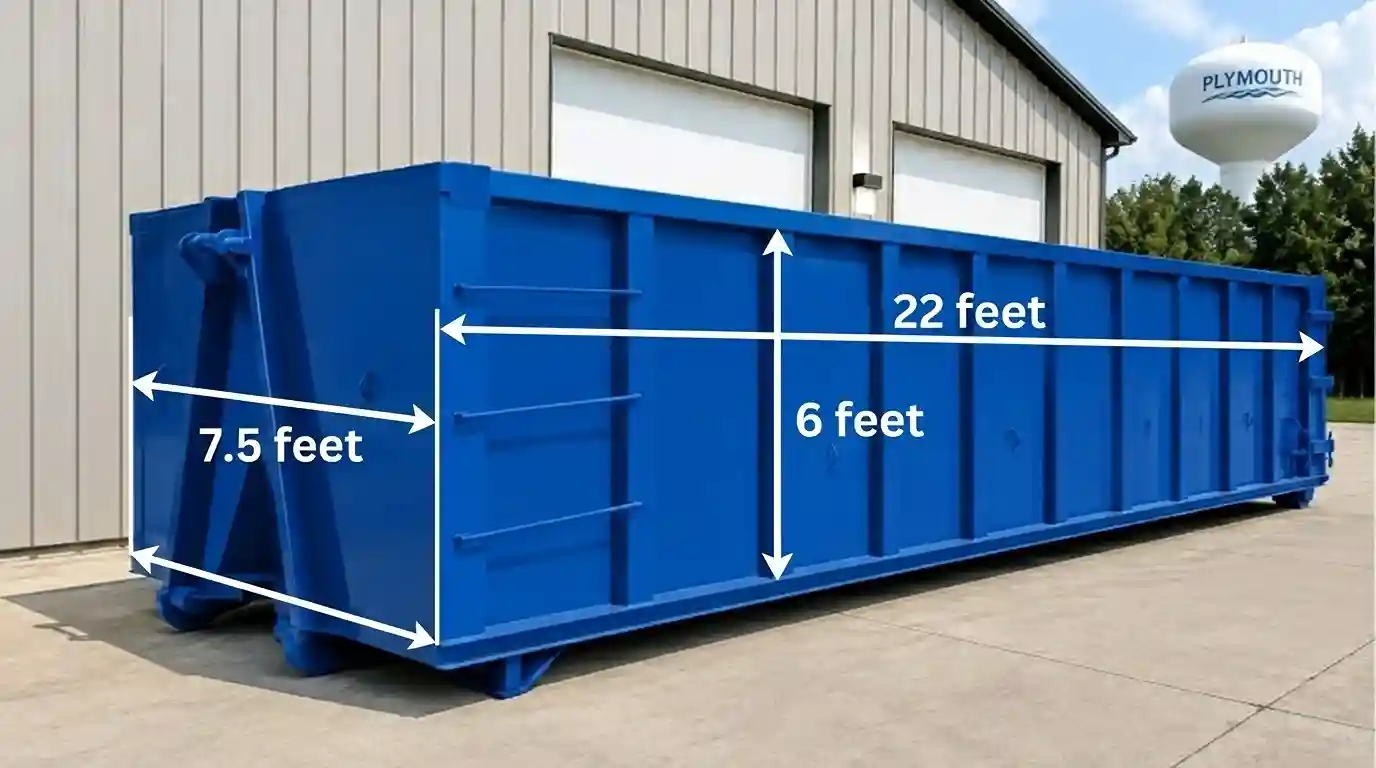
A 30-yard runs about 22 feet long, 8 feet wide, and 6 feet tall — noticeably taller than the 20-yard, which is where most of the extra capacity comes from rather than a bigger footprint. Dimensions vary a bit by manufacturer, so we’ll confirm exact specs when you book.
| Volume | 30 cubic yards |
| Pickup truck loads | About 9–12* |
*Based on a standard full-size pickup bed, heaped
What Actually Goes In One
This size is built for jobs that span more than a single room:
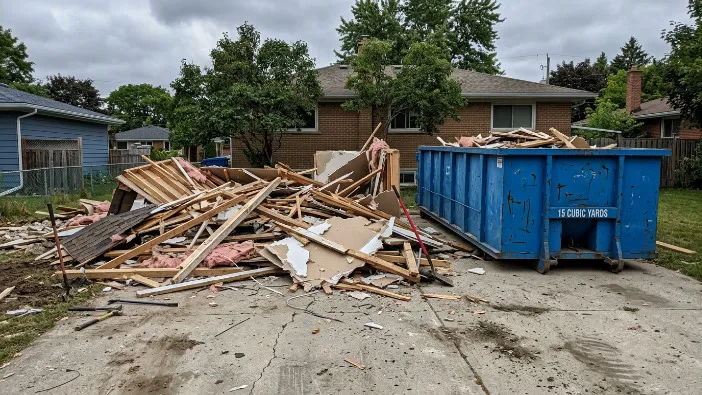
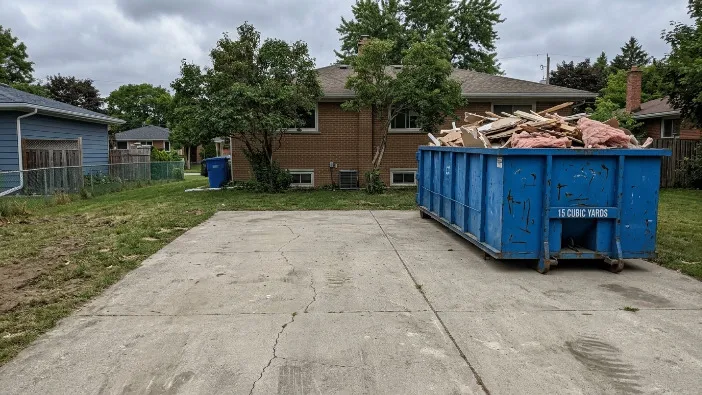
- A full home renovation — multiple rooms gutted at once, not just one
- A whole-house cleanout — everything from a move, downsizing, or estate cleanout in a single container
- A larger roofing job — asphalt roofing debris adds up fast, and how much roof area fits depends on layers, material, and total weight more than square footage alone; ask us to run the math on your specific roof before you book
- Deck or structure removal — a full deck, a shed, or a small structure teardown
- General construction and demolition debris — framing, siding, cabinetry, drywall from a real renovation
Household junk, furniture, drywall, flooring, siding, and roofing debris all go in without issue. What doesn’t go in is set by Massachusetts, same as every size: mattresses and box springs (banned statewide since 2022), electronics, paint, tires, refrigerants, batteries, and anything hazardous or requiring asbestos abatement. (Full breakdown: what can’t go in a dumpster here.)
Cost in Plymouth
| Starting at | $675 |
| Weight included | 3 tons |
| Overage | $95/ton |
| Standard rental | 7 days |
| Extra day | $15/day |
That covers delivery, pickup, and the 3 tons above — debris type, tonnage, delivery access, and a street permit are what move the number from there. (Every size, side by side: see full pricing.)
20 vs. 30 vs. 40 — Which Size Actually Fits
| 20-Yard | 30-Yard | 40-Yard | |
|---|---|---|---|
| Dimensions (approx.) | 22 × 8 × 4.5 ft | 22 × 8 × 6 ft | 22 × 8 × 8 ft |
| Weight included | 2 tons | 3 tons | 4 tons |
| Best for | Kitchen remodel, whole-house cleanout, roofing | Multi-room renovation, whole-house cleanout, demolition | Major construction, full demolition, commercial |
| Starting at | $575 | $675 | $825 |
Not sure you need this much room? The 20-yard covers most single-project remodels.
Can I Put Concrete, Dirt, or Brick in a 30 Yard Dumpster?
In small amounts, yes — but not much. Heavy material like concrete, dirt, and brick will hit the 3-ton weight allowance long before the container looks anywhere near full, and overage on a load that heavy adds up fast. If your project is mostly heavy debris rather than bulky-but-light material, a 10-yard or 20-yard is almost always the cheaper and more practical choice — the 30-yard earns its price on volume, not weight. (Heavy material only? See Concrete & Dirt Disposal.)
Residential or Contractor Job — Both Work
This size gets rented by homeowners doing a genuinely large renovation or cleanout just as often as it gets rented by contractors.
Homeowners
Whole-house cleanouts, downsizing, estate cleanouts, and full-scale renovations that span more than one room — the kind of job where a 20-yard would fill up before you’re done.
Contractors
A common fit for framing and demo debris, drywall, siding, cabinetry tear-outs, and mixed renovation waste from a job too big for a 20-yard. Same heavy-material limits apply — a job that’s mostly concrete, brick, or dirt still makes more sense in a smaller container even on a commercial site. Working multiple properties? Ask about scheduling repeat deliveries — easier to set up ahead of time than trip by trip.
Permits in Plymouth
Same rule as every size: staying entirely on your own property means no town permit. If any part of the container needs to sit on a public street, you’ll need a permit from the Town of Plymouth before delivery. Given the size of this container, more people end up needing street placement than with smaller sizes — worth checking your driveway space before you book so there are no surprises on delivery day. More detail on permits and placement →
Frequently Asked Questions
How many pickup truck loads is a 30 yard dumpster?
Around 9 to 12, based on a standard full-size pickup bed heaped with debris.
What happens when a 30-yard dumpster hits its weight limit?
The container can still have visible room left even after you’ve hit the 3-ton allowance, especially with denser debris — weight and volume are separate limits, and whichever one you hit first is what matters. Going over adds a per-ton overage charge rather than stopping the job; if you’re not sure how heavy your load is trending, call partway through and we can talk through whether it’s worth adjusting.
Is a 30-yard overkill for a single-room remodel?
Usually, yes — for one room, a 15 or 20-yard is more cost-effective. The 30-yard makes sense once the project spans multiple rooms or generates whole-house volume.
What’s the real difference between a 30-yard and a 40-yard?
Height. Both run about 22 feet long and 8 feet wide — the 40-yard is 2 feet taller, giving it roughly a third more capacity in the same footprint. If you’re unsure which one you need, describing the project gets you a faster answer than guessing off cubic yards.
Will a 30-yard fit in my driveway?
In most cases, yes — the footprint is similar to a 20-yard. The difference is overhead clearance, since this container sits taller. Plan on roughly 25 feet of vertical room near the drop spot.
Do contractors get a different rate for a 30-yard?
Pricing is the same regardless of who’s renting — but if you’re scheduling recurring deliveries across jobs, ask when you call, since we can often make repeat scheduling easier to manage.
Ready to Book?
If your project spans more than one room, involves a real demolition, or you’re clearing out a whole house, a 30-yard is likely your size — and now you know what it costs, what it holds, and where the line sits against a 20 or a 40.